Journal home / All articles / Licences and the trade
Products, batch numbers and manufacturer warranties
A membrane system is a chemical product with a batch, a data sheet and conditions. A spoken “ten-year warranty” is none of those things until someone writes the numbers down.
Tom Birtles · 16 June 2025 · Updated 21 July 2026
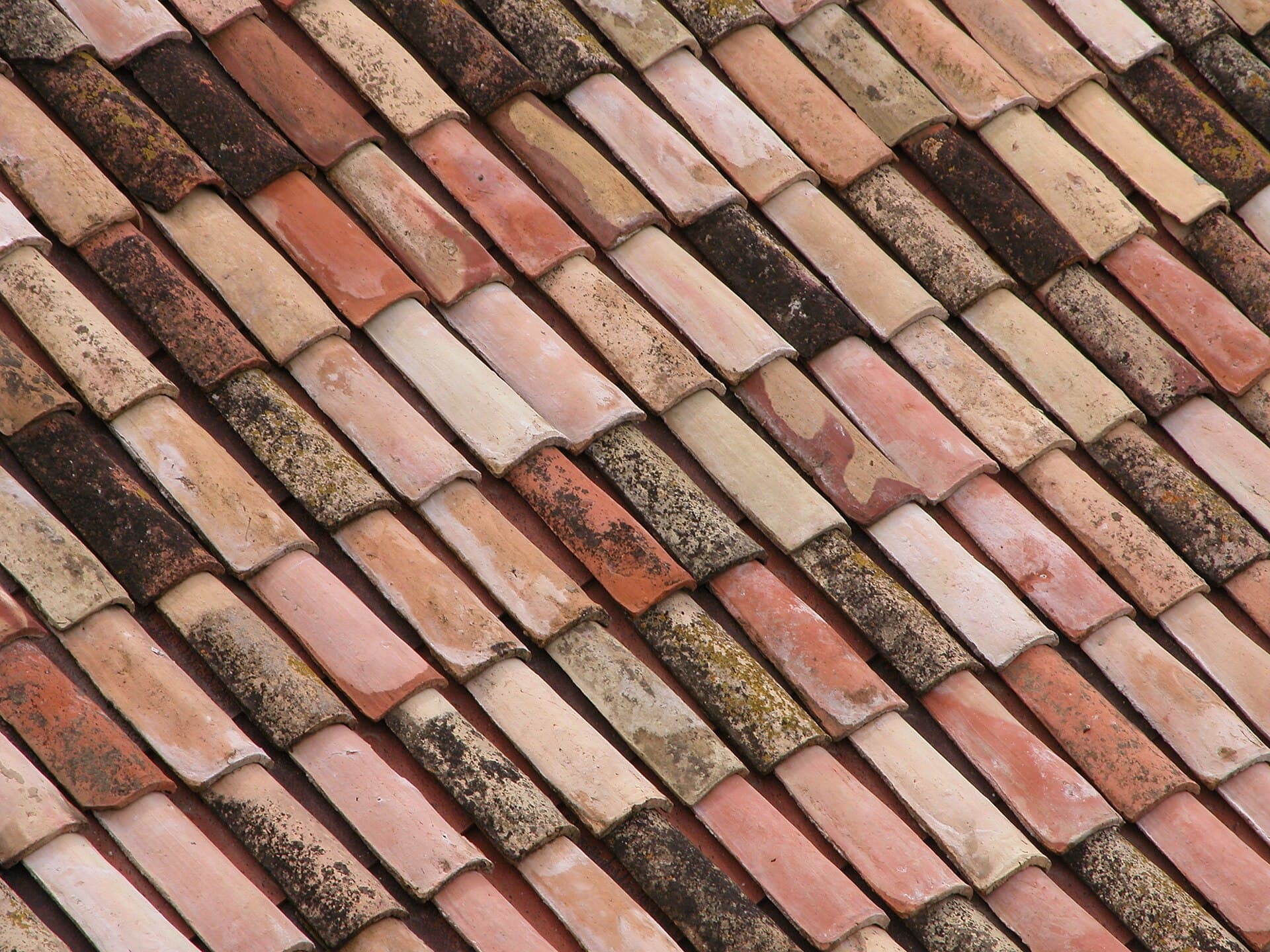
Monk-and-nun terracotta tiles in close detail. Photograph: Procsilas Moscas. CC BY 2.0. Source: Wikimedia Commons. See the image credits page.
Paint, on a Brisbane roof, is never just paint. The restoration trade has spent forty years trying to make that sentence sound either more scientific or more magical than it is. The honest version sits in the middle. A modern roof membrane is a formulated acrylic or hybrid system with a primer or sealer, a specified film build, a recoat window, and a weathering performance that depends on ultraviolet light, ponding, movement and the honesty of the surface underneath. It comes in batches. Those batches are numbered because chemistry is not uniform across every drum that left the factory in a given month, and because a warranty claim that cannot name the batch is a letter the manufacturer can file under folklore.
The old family sites in this city used to print manufacturer names the way they printed QBSA numbers. Dulux AcraTex and a handful of other systems were the language of a certain Brisbane decade. Approved applicator schemes sat beside the licence as a second badge. Some of that language was earned. Some of it was a decal. The schemes have been renamed, tightened, abandoned or absorbed since those pages were live. What has not changed is the underlying need. If you want a manufacturer to stand behind a coating, you have to be able to prove which coating it was, who applied it, and whether the specification was followed. A colour photograph of a shiny ridge is not that proof.
This is a compliance essay as much as a products one. A QBCC licence — historically a QBSA licence — tells you the contractor may offer the work. It does not tell you which drum they opened.
What a batch number is for
A batch number is the factory’s memory of a particular mix. If there is a problem with a raw material, a tint, or a run that cured too fast in a January warehouse, the number is how that run is found again. It is also how a later dispute is anchored. “We used the usual grey” is not a sentence a technical department can act on. “Batch 18A-something, two coats, over the specified sealer, applied on these dates” is.
Ask the contractor to record the product name, the sheen or profile if relevant, the batch numbers for primer and topcoats, and the dates they were applied. Ask for that record on paper or in an email you keep with the invoice. Photograph the drums on site if the crew is willing; most owner-operators are. Canvassers who have already sold the job to a spray team they do not supervise are less willing, because they do not know which drums will arrive.
Batch numbers also protect the contractor. If a later stain is tannin from an overhanging blackbean, or ponding from a sagging valley, the manufacturer can say so more cleanly when the product identity is not in doubt. If the film really is defective, the homeowner is not left arguing about whether last autumn’s work was “the good stuff” or a bulk acrylic bought to protect a cheap quote.
Keep the offcuts. A competent tile restoration replaces broken units before coating. A few sound extras, coated with the same system on the same day, are more valuable than a colour chip in a drawer. Store them out of the weather, labelled, with the batch record. Five years later, when a solar installer cracks three tiles on the north pitch, you will be able to repair the roof as a roof rather than as a collage.
Approved applicators, then and now
Manufacturer applicator schemes were designed to solve a real problem. A sophisticated membrane applied by a person who had never read the data sheet is not the product the manufacturer tested. Training, enrolment, and the threat of being struck off were supposed to keep the field application somewhere near the laboratory. In Brisbane they also became a marketing layer. The van said approved. The driveway conversation said warranty. The job sometimes said otherwise.
Treat current schemes as questions, not as nostalgia. Is the contractor actually enrolled, or are they using a leftover logo? Does enrolment apply to this product line, or to a different one the company used to sell? What does the scheme require at the job: minimum film build, specified primers, moisture limits, photos, a job card? Who submits the paperwork — the contractor or you? What happens if a later trade, such as a solar crew, damages the film?
A historical approved-applicator badge from a Wayback page is not a present-day enrolment. The old site on this domain talked in that language because that was how the trade talked. It is useful as a clue to what homeowners were taught to ask. It is not a reason to accept a faded decal as a document.
If there is no scheme, you are not automatically unsafe. Many sound jobs are done with named products, recorded batches, and a contractor guarantee, without a manufacturer program underneath. You have simply lost one pathway. Be clearer, then, about the remaining ones. Read the data sheet yourself. It will be dull, and it will tell you more than a flyer about recoat windows, dew-point limits, and whether the system is meant for ponding water. Pair this page with membrane coatings, primer, sealer and topcoats if you want the film explained as a sequence rather than as a brand.
What manufacturer warranties actually condition on
Manufacturers do not warrant the weather. They warrant their product when it is used as they specify, on a suitable substrate, by a person who followed the sheet, often within a program, and often only if the owner maintains the roof in a defined way. Those conditions are where spoken promises go to die.
Typical conditions, in substance if not in every current wording, include a sound substrate, the correct primer, the correct film thickness, application inside a temperature and humidity window, no contamination between coats, and no later damage. Subtropical Brisbane spends a good part of summer outside pleasant application windows. A crew that sprays through an afternoon storm because the diary is full is not doing the manufacturer a favour. A crew that coats a mossy tile because “the pressure clean took the worst off” is building a warranty dispute into the first wet season.
Maintenance conditions matter more than homeowners like. A membrane that is buried under leaf litter in a west-facing valley, or walked monthly by a person checking a skylight in hard-soled shoes, is not living the life the data sheet imagined. The first twelve months are when curing, first storms and later trades do most of their damage; the first twelve months after restoration is the practical companion. The legal companion is warranties that survive the first storm. Read both before you file the brochure and forget it.
Do not invent a term of years and treat it as standard. Terms vary by product, by system, by whether a primer was used, and by whether the job was registered. A number offered on a verandah is not a term. The document is the term. If the contractor will not leave the document, you do not have the warranty you are being sold.
A warranty that cannot name the batch, the system and the conditions is a compliment, not a contract.
The spare tile, the offcut, and the later hole
Roof restoration is unusually bad at thinking about next year. The crew wants the after photograph. The owner wants the scaffold gone. The solar company, six months later, wants a clean path from the ridge to the north pitch. Someone will walk the film. Someone will drill. Someone will replace a cracked tile with an uncoated spare from a hardware aisle because the labelled offcuts were thrown in the skip.
Make the opposite plan.
- Ask the crew to leave a small set of coated tiles or a metal offcut, depending on the roof.
- Ask them to note the product on unused drums rather than pouring leftovers onto a shed roof “so it doesn’t go to waste”.
- Ask for the data sheet as a PDF, not as a promise to send it later.
- Put the batch record, the warranty documents, the QBCC licence search you did before you signed, and the working-at-heights method into one folder.
Future you, or the person who buys the house, should be able to reconstruct the job without calling a mobile number that no longer rings.
If you have a metal roof, the same logic applies to leftover screws and a note about the profile. If you have mixed materials — terracotta at the front, corrugated over the rear — record both systems. Hybrid roofs are how Brisbane houses grow. They are also how warranties become arguments about which product was meant to cover which plane.
How this sits beside the rest of the trade
None of this replaces a licence check, a heights method, or an asbestos pause at the eaves. A beautifully documented batch number on a job that skipped edge protection is still a job that gambled with a person. A manufacturer letterhead does not identify fibre-cement. Owner-operators who came out of the old Brisbane scene tend to be better at the paperwork than canvassers, not because they love forms, but because they are the ones who get the February phone call.
Driveway high-pressure cleaning, sold for years as a companion to the roof, has no batch number that will help you. It is a service, not a system. It can still be done well or badly. It should not be allowed to set the rhythm of the roof. The roof has chemistry. The driveway has mould. Do not let a crew that is thinking about the path hurry the recoat window on the tiles.
If a contractor talks fluently about colour and warranty years, and clumsily about primers, dew, film build and batches, you are hearing a pitch. If they talk about the drum in the trailer, the sealer the last restorer used, and the reason they will not coat the south valley until the rusted iron is replaced, you are hearing a trade. Hire the second voice. Keep the numbers. Keep the tiles. The membrane will weather in any case. What you are buying, besides a film, is the ability to talk about that film in 2029 without guessing.
Questions from the verandah
- Why would I keep a leftover coated tile?
- Because colour, texture and film build are easier to match from a physical offcut than from a memory of “that mid grey”. A spare also lets a later repair use the same system instead of a hardware-store acrylic that will weather as a patch.
- Do approved applicator schemes still matter?
- They matter as history and as a warranty pathway. Some manufacturers still run them; some have changed names or conditions. A logo on a van is not enrolment. Ask for the current status and what it actually unlocks.
- What if the contractor will not give me batch numbers?
- Treat that as a missing document, like a quote without a specification. You may still like the work. You will have a weaker argument if the film fails and the manufacturer asks for the batch.
- Is a manufacturer warranty the same as the contractor’s guarantee?
- No. One is about the product when it is used as specified. The other is about the workmanship. You want both in writing, and you want to know which problems each one refuses.